

ACT Supreme Court Stresses In-Person Participation in Court-Ordered Mediation
Date: 18 September 2026; Sources: AustLII; Supreme Court of the Australian Capital Territory; Reported by: Rohitha Roy
Court-Ordered Mediation, In-Person Mediation, Online Mediation, ACT Supreme Court, Mediation Participation
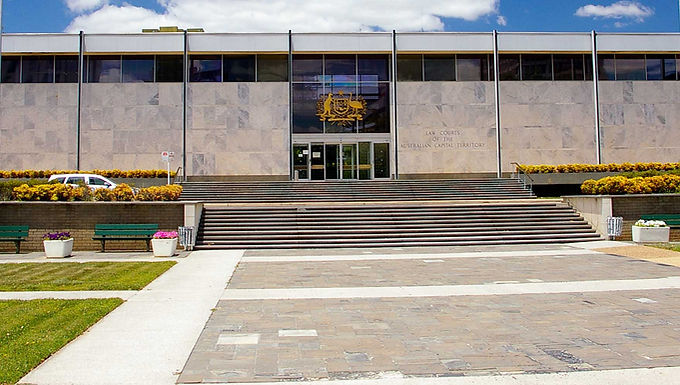
The Supreme Court of the Australian Capital Territory has emphasised the value of personal attendance at court-ordered mediation, holding that the inconvenience of interstate travel, work commitments, and ordinary caring responsibilities will not ordinarily justify participation by audiovisual link. In BM1 v Daramalan College [2026] ACTSC 359, Justice Muller considered applications seeking permission for an insurer’s claims officer to participate remotely in three scheduled mediations.
The three proceedings had been referred to court-appointed mediation, with directions requiring each separately represented party to have a person physically present who possessed authority to give final agreement to a settlement proposal within any reasonably anticipated range. The mediation dates had been fixed approximately eight weeks earlier. Shortly before the scheduled mediations, Daramalan College sought permission for the claims officer handling the matters to participate by audiovisual link.
The Court was not satisfied that exceptional circumstances had been established. Justice Muller noted that residence interstate and significant disruption to ordinary work or personal activities would not generally be sufficient. While circumstances such as illness, medical treatment, attending a funeral or unavoidable caring responsibilities could potentially justify remote participation, the circumstances advanced in these proceedings did not meet that threshold. The Court also considered significant the fact that the requirement for in-person attendance had been known well in advance. ACT Courts
In addressing the purpose of personal attendance, the Court referred to the value of participants devoting their full attention to the mediation and obtaining the advantages of direct human interaction in communication and negotiation. It also referred to earlier authority recognising that claims managers' attendance can promote fuller engagement with the factual and legal issues and improve the effectiveness of the mediation process.
The applications for AVL participation were ultimately dismissed. The court-ordered mediations in Canberra were vacated after the parties agreed to an alternative arrangement involving private mediations in Sydney before David Higgs SC. One mediation was scheduled for 17 September, while the other two were to take place on or before 28 September 2026. The parties were to share the costs of the private mediations equally.
The decision is significant for mediation practice because it treats attendance as more than a procedural formality. The Court's reasoning links physical presence to attention, engagement, and the quality of interpersonal communication that may contribute to effective negotiation. At the same time, the judgment does not establish an absolute rule against online participation: it recognises that appropriate circumstances may justify departure from the usual requirement for personal attendance.